
How to plan for a seamless and productive interior design photoshoot
Planning ahead, adapting on the day, and refining in post-production
Those elegant magazine cover images may look effortless, but they are rarely the result of luck. There will have been plenty of planning in the run-up to the shoot; discussions on the narrative, props, logistics and key images. Detailed preparation ensures a friction-free shoot day where the focus will be on composing, styling and capturing that all-important hero image.
“The Pre-Shoot Plan” Preparation and planning
Initial discussions usually start with the sharing of some phone snaps, a wish list of main shots and the story we are looking to tell. We then look at the styling and props we will require to turn this “wish list” into a viable “shot list”.
Logistics on the day often revolve around the homeowner, so it is critical they understand what a professional photoshoot entails, ensuring they don’t underestimate the time involved and how much moving of furniture/belongings takes place. By addressing these practicalities early, we clear the way for a day focused on creativity rather than troubleshooting.

"Preparing to shoot a luxurious Notting Hill apartment" Visit case study
Preparation logistics
Remote recce: Any phone images/videos my client has of their project are invaluable when preparing for a shoot. I also check the weather and work out where the sun will be so we can chase the light, room by room.
The shot list: Although the shot list is always evolving, a wish list of “must haves” ensure the design intent is captured, while the “bonuses” allow for more creative exploration.
Homeowner expectations: Explaining to the homeowner that a professional photoshoot is fun, but also a disruptive, methodical, slow process will help manage their expectations on the day.
Preparing props: The narrative of the shoot may determine specific props that will need to be sourced before the day. This could include furniture or rugs that were originally specified but not chosen by the client.
Managing the site: Having an empty home speeds up the photoshoot. This includes pets, other contractors and ideally the homeowners!
“Managing a Photoshoot” Timings and tempo
One thing you can only learn from experience is how to manage the available time on a shoot. On arrival, I like to walk through all the rooms we are intending to shoot, decide on the main angles, look at the sun (which will determine where to start) and set a target of where we need to be by lunchtime. Splitting the shoot in two helps set a steady tempo for the day, making sure we have the time we need in each room without feeling rushed on those hero images.
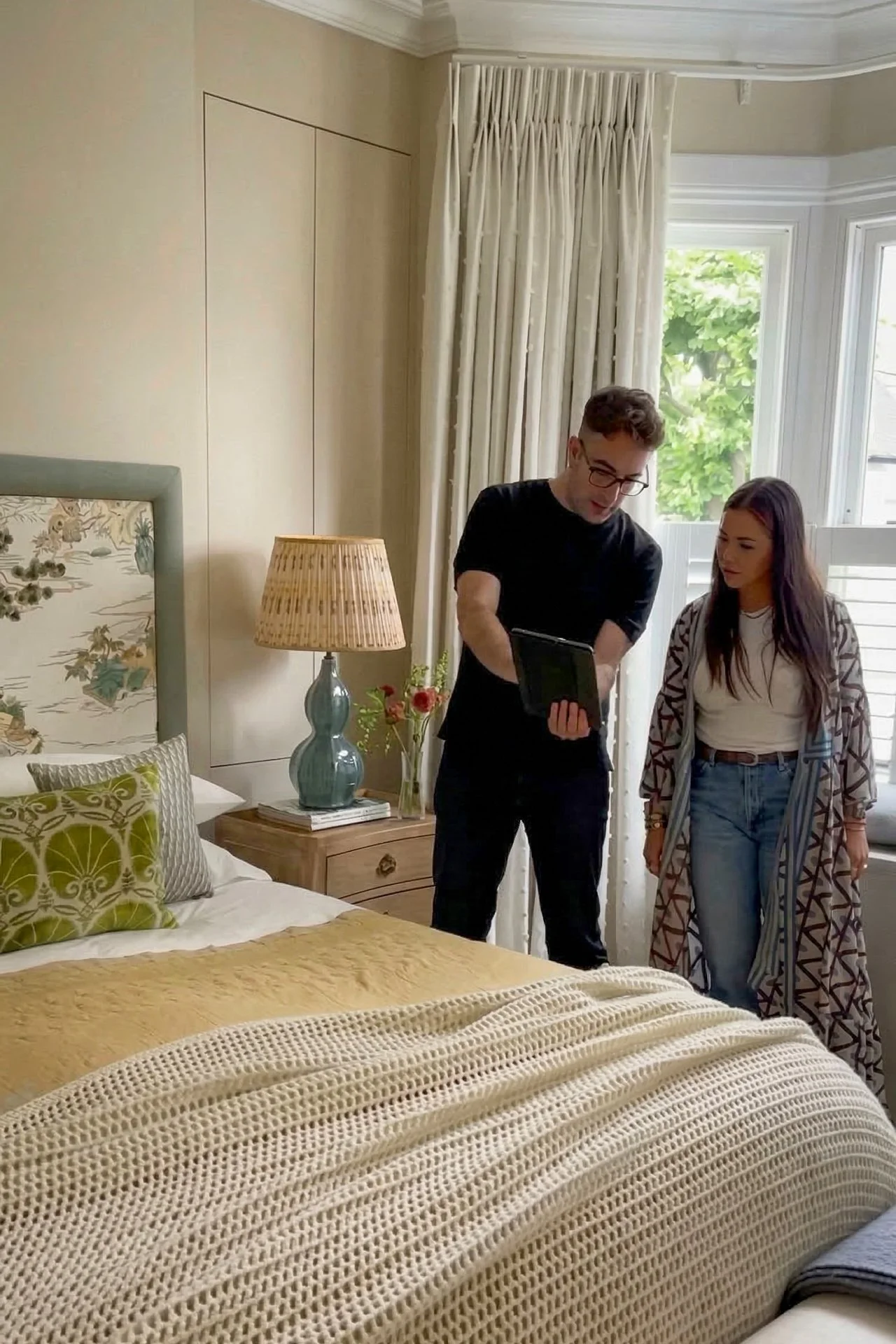
During the shoot itself, the iPad becomes a vital tool for collaboration. As well as checking we have a sharp final image, the on-screen live view is invaluable for making composition decisions, styling choices and ensuring everything is in place before taking the final shot. I enjoy working collaboratively and I think this approach gives a level of control to my clients and the reassurance of seeing the results while we work through the shot list.

"Managing a hospitality shoot on a short timeframe" Visit case study
Running a photoshoot
Chasing the light: On arrival we walk through each room, discuss the shot-list and any logistics we need to consider. The light will determine which order the rooms are captured in.
Pacing the photoshoot: In my experience it is a good idea to split the day in two; knowing the number of rooms we need to shoot before lunch ensures we won’t be rushed in the afternoon.
Reviewing as we go: The iPad is an invaluable tool for live-view composition and styling. It also helps us quickly reference earlier shots from the day ensuring continuity.
Photoshoots are tiring: It always amazes my clients how tiring photoshoots are. Even if we don’t have time to stop for lunch, keeping hydrated and remembering to eat is vital to keep the creativity going.
Adapting on the day: Even the best planned photoshoots don’t always go to plan. Being able to adapt on the day is a big part of the job and key to delivering a comprehensive set of images.
“An Efficient Photoshoot” Reviewing and adapting
Once we have completed a room it needs to be put back together for the client. It is good practice to take a phone snap before we start moving furniture and styling so that the room can be returned to its original state. This is where it’s always helpful to have an extra pair of hands, so whilst a room is being photographed, the room before can be tidied and the next room prepared.
I will often shoot the same cushion once on the left side of a sofa and then move it to the right for the second shot, blending the two images in post production.

"A week long shoot results in a 10-page Homes & Gardens feature" Visit case study
The Final Polish
Dressing and resetting: It’s a good habit to take a phone video of each room before it is dressed for a shot so it can be returned to its original state. Not just tidying; respecting the homeowner’s space.
Looking ahead: An extra pair of hands is always invaluable on a photoshoot. Whilst a room is being captured the previous room can be tidied and the next room prepared.
Composite imaging: We often shoot multiple shots of a scene and blend them “in post”. This allows you to create visual symmetry by reusing a cushion, side-table or lamp multiple times in the same image.
In-camera integrity: Photoshop and AI are useful tools, but they are no substitute for getting the scene correct in camera, ensuring the integrity of textured fabrics and wall coverings.
Post-shoot review: A moment to look back through all the images we have captured during the day and talk through the edits/crops colour grading that are needed to deliver the set.
“Focus on Design Not Chaos” Planning and execution
Spending the time on the planning and logistics before a shoot means that on the day the focus is purely on being creative and getting the shots that properly articulate your hard work. From scheme, to building site, to finished job; the photoshoot often marks the end of a project and a well-organised shoot will result in a comprehensive set of images, ready to help pitch for the next one.
Let's discuss how we can document your next project for editorial success
Knowledge Base
The Art of Interpreting Interior Design
Collaborating with your photographer to create high quality imagery.

Photography for Interior Magazines
Creating images that start the conversation with writers and editors
Chris Wakefield Photography
More about me, my clients, services, portfolio and how I work.